


Should Roof Flashing Be Replaced When You Get a New Roof? Chimneys, Walls, Valleys & Pipe Boots Explained
Roof Flashing and Your New Fayetteville, GA Roof: What Should Be Replaced and What Can Stay
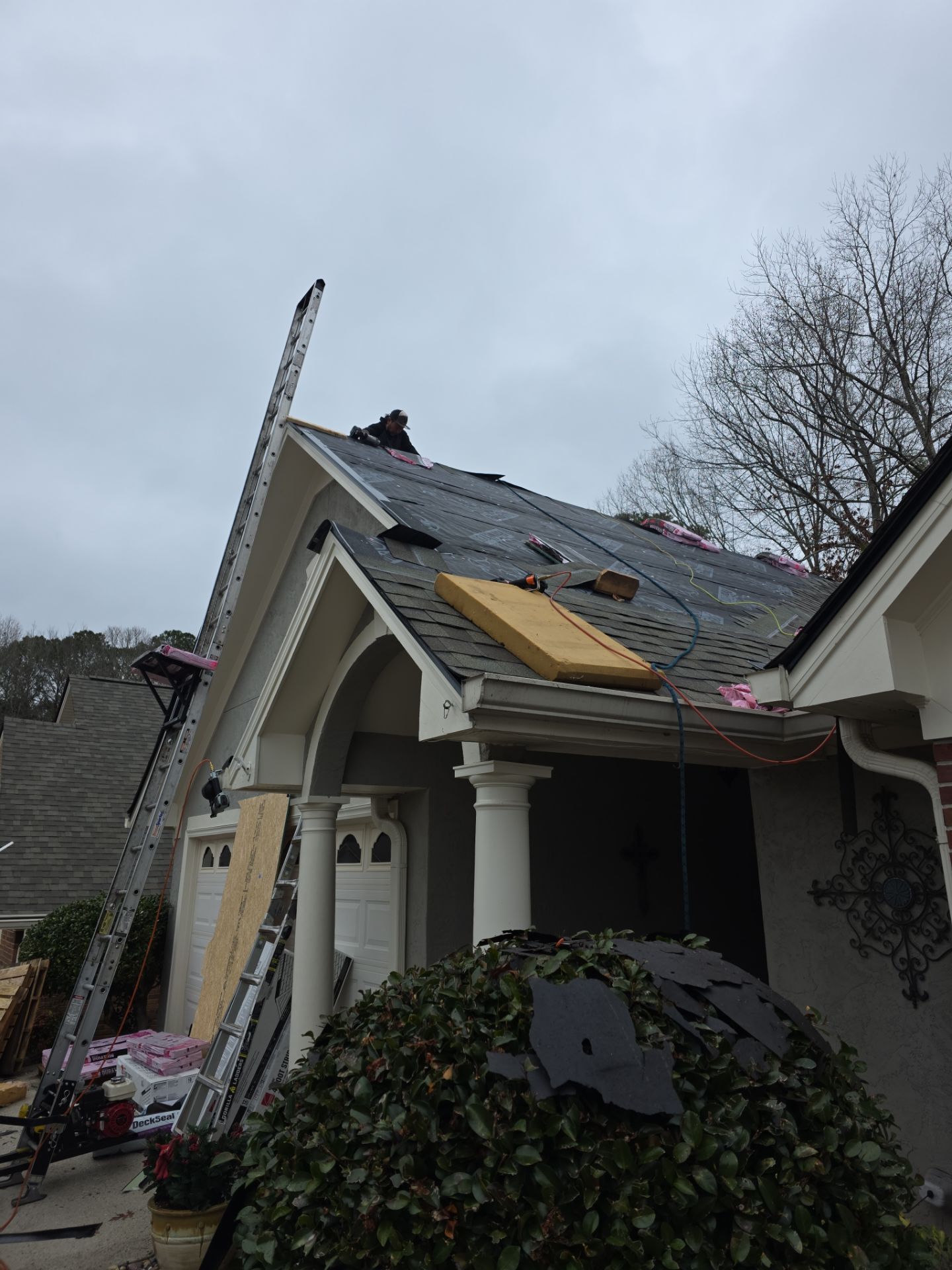
Fayetteville homeowners getting a new roof often receive different answers from different contractors about flashing: one says it all needs to come out with the old shingles, another says it can stay in place under the new installation, a third says it depends on the condition. All three answers can be correct depending on what is actually there. The question is not whether flashing is expensive or inconvenient to replace. It is whether the specific flashing on a Fayetteville property is in condition to function correctly under a new shingle roof for the next 15 to 20 years.
Dedicated Roofing of Georgia serves Fayetteville and the surrounding Fayette County area with new roof installation, repair, and replacement. Honest assessment. Free inspections. Call 678-562-1926 or visit Fayetteville roofing services.
Pipe Boots: The Flashing That Almost Always Needs Replacement
Pipe boots are the rubber or lead flashings that seal around pipe penetrations through the roof. The rubber collar degrades under UV exposure and heat cycling, cracking at the seal where it contacts the pipe. A pipe boot that is cracked but has not fully failed may be allowing minor moisture entry during heavy rain without producing obvious interior symptoms. Installing new shingles around an original pipe boot on a 15 or 20-year-old Fayetteville roof installs a new roof with an existing failure point at every pipe location.
Replacing pipe boots during a new roof installation is inexpensive relative to the cost of the full project. Replacing them after the fact requires removing and resetting shingles around the penetration. Dedicated Roofing of Georgia replaces pipe boots as a standard part of new roof installation on Fayetteville properties where the existing boots are past reliable service life.
Step Flashing at Wall and Chimney Transitions
Step flashing at wall transitions and chimneys consists of individual metal pieces that integrate with each shingle course as it runs up to a vertical surface. When done correctly, it is one of the most durable flashing configurations in residential roofing. When done incorrectly or when it has corroded, it is one of the most common sources of water intrusion on Fayetteville homes. Step flashing that is in good condition and correctly integrated with the existing shingles can sometimes be reused with a new installation. Step flashing that is corroded, bent, or improperly lapped typically cannot.
Counter flashing at chimney bases, the metal piece embedded in the mortar above the step flashing, is separate from the step flashing itself. The sealant at counter flashing joints and the mortar that holds it in the masonry face both degrade over time in Georgia's climate. Dedicated Roofing of Georgia assesses counter flashing condition during the Fayetteville roof inspection before recommending replacement or reuse.
Valley Flashing: Open Metal vs. Closed Woven Valleys
Valleys on a Fayetteville roof can be flashed with open metal flashing, woven shingles, or cut shingles over metal. Each approach has different replacement implications during a new roof installation. Open metal valley flashing that is in good condition can sometimes be left in place and covered with new shingle courses if the metal is sound. Woven valleys are typically replaced with each new shingle installation because the shingle material itself constitutes the valley waterproofing.
Valley flashing that is corroded, lifting at the edges, or improperly sealed at the top where it transitions to the field is flashing that should not carry over to the new roof installation regardless of the valley type. The valley concentrates water from two adjacent slopes and a failure there produces significant water volume entering the structure.
Drip Edge: The Flashing That Gets Skipped
Drip edge is the metal flashing installed along the eave and rake edges that directs water off the roof edge cleanly into the gutter rather than allowing it to wick back under the shingles. Current Georgia building code requires drip edge on new roof installations. An older Fayetteville roof without drip edge should have it installed as part of the new roof scope. It is not expensive. It prevents the fascia rot and eave damage that results from water wicking under the shingle edge. Dedicated Roofing of Georgia includes drip edge as a standard component of every new Fayetteville roof installation.
Dedicated Roofing of Georgia: Fayetteville and Fayette County
Dedicated Roofing of Georgia serves Fayetteville and the surrounding Fayette County area with asphalt roof installation, repair, replacement, and inspection. Honest assessment. Clear communication. No mess. Free inspections. Call 678-562-1926 or contact Dedicated Roofing of Georgia.
Schedule a Free Roof Estimate in Fayetteville
For a free roof installation estimate in Fayetteville, call 678-562-1926 or contact Dedicated Roofing of Georgia online.
Frequently Asked Questions About Roof Flashing Replacement in Fayetteville, GA
Should pipe boots always be replaced during a new roof installation in Fayetteville?
Pipe boots on a roof over 10 to 15 years old should generally be replaced during the new installation. The rubber collar degrades under UV and heat cycling, cracking at the pipe contact point. An existing boot that has not fully failed may still be allowing minor moisture entry during heavy rain. Replacing boots during the installation is inexpensive compared to addressing them separately later, which requires removing and resetting shingles around each penetration.
Can step flashing be reused during a Fayetteville roof replacement?
Step flashing in good condition and correctly integrated with existing shingles can sometimes carry over to a new installation. Step flashing that is corroded, bent, improperly lapped, or showing any signs of failure should be replaced. Dedicated Roofing of Georgia assesses step flashing condition during the free Fayetteville estimate and makes a specific recommendation based on what is actually found rather than a blanket policy for or against reuse.
What is counter flashing and does it need to be replaced with a new Fayetteville roof?
Counter flashing is the metal piece embedded in the mortar of a chimney above the step flashing. The sealant at the counter flashing joints and the mortar holding it in the masonry face both degrade in Georgia's climate over time. Counter flashing condition is assessed during the Fayetteville roof inspection to determine whether it should be resealed, re-embedded, or replaced as part of the new installation scope.
Is drip edge required on a new roof installation in Fayetteville, GA?
Yes. Current Georgia building code requires drip edge on new roof installations. Older Fayetteville roofs without drip edge should have it installed as a standard component of the new installation scope. Drip edge directs water off the roof edge cleanly into the gutter rather than allowing it to wick back under shingles, which prevents fascia rot and eave damage that develops when water runs behind the gutter line.
What happens if old flashing is left in place under a new Fayetteville roof?
Old flashing left in place under a new roof installation carries existing failure points forward into the new roof's service life. A pipe boot that was cracking under the old shingles is still cracking under the new ones. Step flashing that was improperly lapped or corroded is still improperly lapped and corroding. The new roof materials perform correctly, but the new roof leaks through the old flashing that should have been addressed during the installation.
Does Dedicated Roofing of Georgia serve all of Fayetteville and Fayette County?
Yes. Dedicated Roofing of Georgia serves Fayetteville and the surrounding Fayette County area with asphalt roof installation, repair, and replacement. Call 678-562-1926 to confirm service for a specific Fayetteville, GA address or to schedule a free roofing replacement installation estimate.